The Pleasures of Fanny
There is something wonderfully appropriate about seeing The Pleasures of Fanny at Brick Lane Music Hall. The venue’s theatrical history, intimacy and eccentricity provide an ideal home for a production that delights in the particular chaos of amateur dramatics, where egos are enormous, costumes are questionable and nobody quite knows what is going to happen next.
The production begins its work before the audience has even taken their seats. Pre-show scenes scattered around the auditorium establish an immersive world and immediately give the evening a sense of occasion. It is an effective device, although the production might have benefited from establishing a little more polish and theatrical control before allowing that world to disintegrate into the glorious amateur-dramatic chaos at its heart.
The play begins at almost full comic volume, leaving less room for the eventual unravelling to escalate. The premise is a familiar one: a company (the Silvertown Lovies Amateur Group - read into that what you will…) attempting to stage a theatrical debut of the highly scandalous novel Memoirs of a Woman of Pleasure, while everything around them begins to collapse in spectacular fashion. Shannon Rewcroft and Jack Pallister’s script has a strong comic ear and knows exactly how to extract a laugh from a well-timed innuendo. There are perhaps rather more Fanny, Willy and Cocky jokes than strictly necessary, although the audience clearly had no objection.
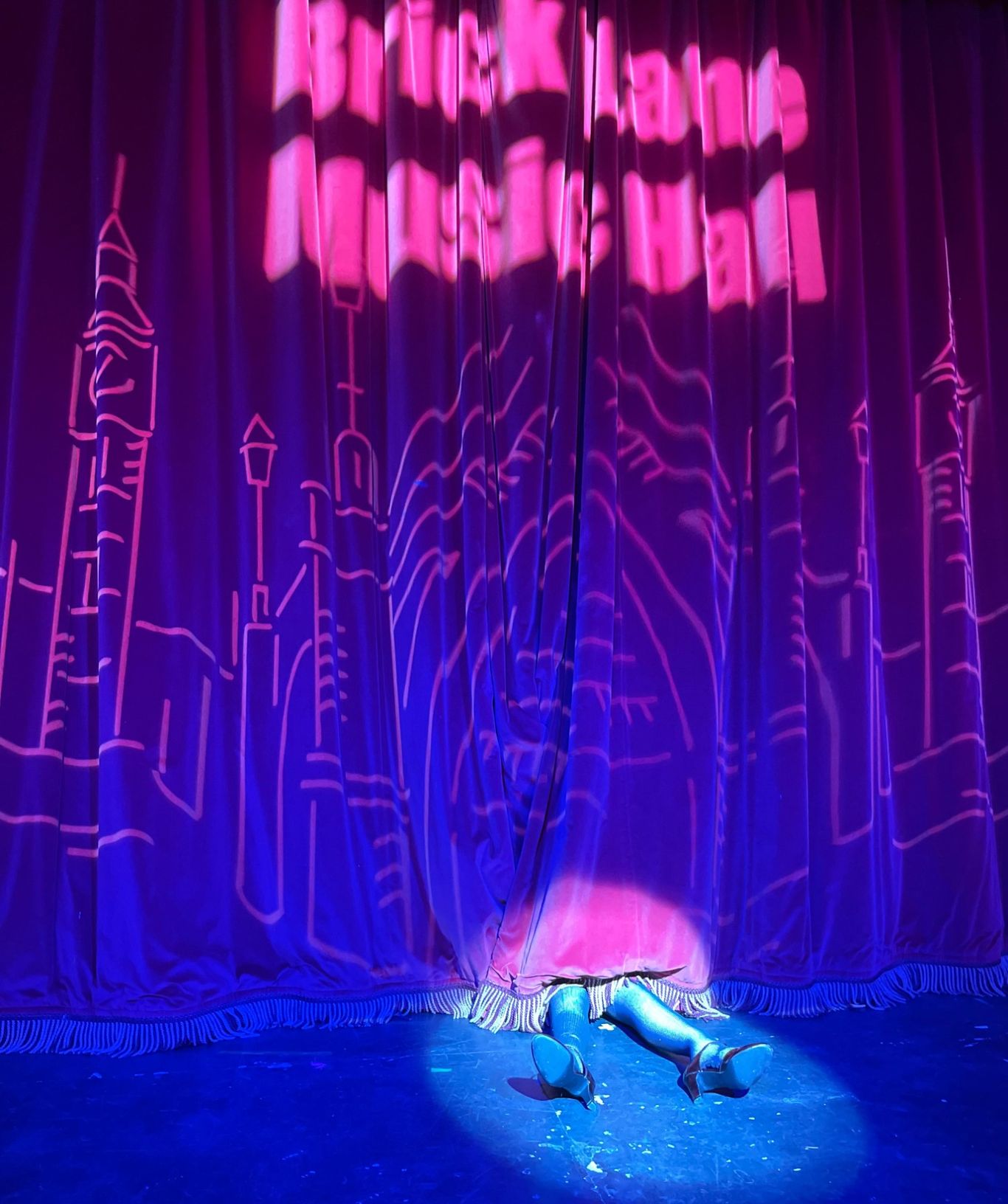
The larger difficulty is the choice of source material. Memoirs of a Woman of Pleasure is not sufficiently familiar to carry the same immediate comic recognition that a more culturally embedded play might have provided. Consequently, the play within a play occasionally feels less substantial than the Noises Off-style machinery dismantling it. The chaos is very funny; it simply feels as though it might have landed even harder had the audience been more invested in the thing being destroyed. Yet the production’s handling of its murder mystery is a particularly clever piece of theatrical misdirection. For much of the first half, the murder almost slips from the audience’s consciousness entirely. We become so absorbed in the amateur company’s increasingly chaotic attempts to stage their production that we momentarily forget a murder is even afoot. It is an impressive achievement: the comedy and character dynamics are sufficiently engaging to allow the central mystery to recede without losing the audience’s investment. When the murder finally comes to the fore, it is handled with confidence, drawing the audience into the investigation through an interactive format that has already been carefully established. Rather than feeling like a separate show bolted onto the comedy, the mystery grows organically out of the world we have spent the evening inhabiting.
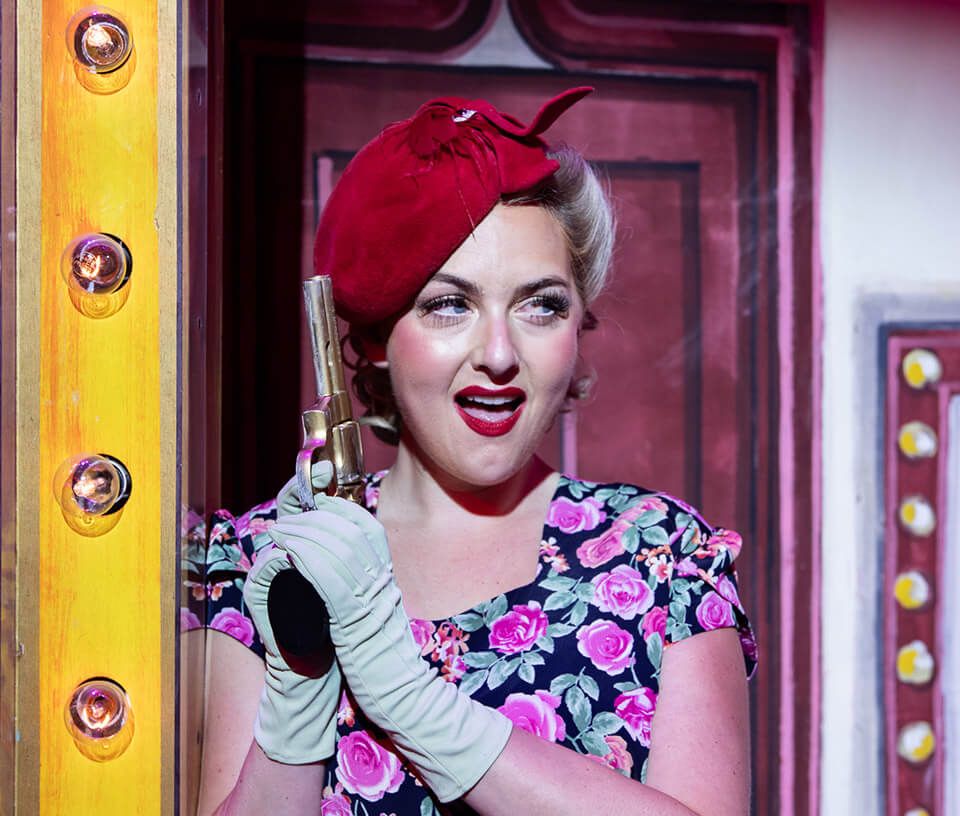
The performances, however, are consistently committed and excellent. Shannon Rewcroft gives Fanny the perfect combination of vanity, insecurity and diva-like authority, creating a deliciously recognisable amateur-theatrical leading lady. Lucy Reed’s Mary Garden is an equally effective foil: jealous, sensual and gloriously self-aware, with Reed finding a comic physicality that repeatedly draws the eye and a fantastic voice to match. Jack Pallister’s director is a particularly enjoyable piece of theatrical observation, an amalgamation of countless directors whose artistic conviction is matched only by their inability to communicate with anyone around them. Watching his stress build is highly entertaining. Ross Tomlinson, meanwhile, gives perhaps the evening’s most endearing performance. His comic vulnerability wins the audience over completely, with his Irish dancing proving an unexpected highlight. Annabelle Fage’s stage manager is an exhausted presence amid the mayhem, although her appearances occasionally feel more functionally inserted than dramatically motivated. When her opportunity finally arrives, however, Fage grabs it with both hands and delivers a real moment of vulnerability.
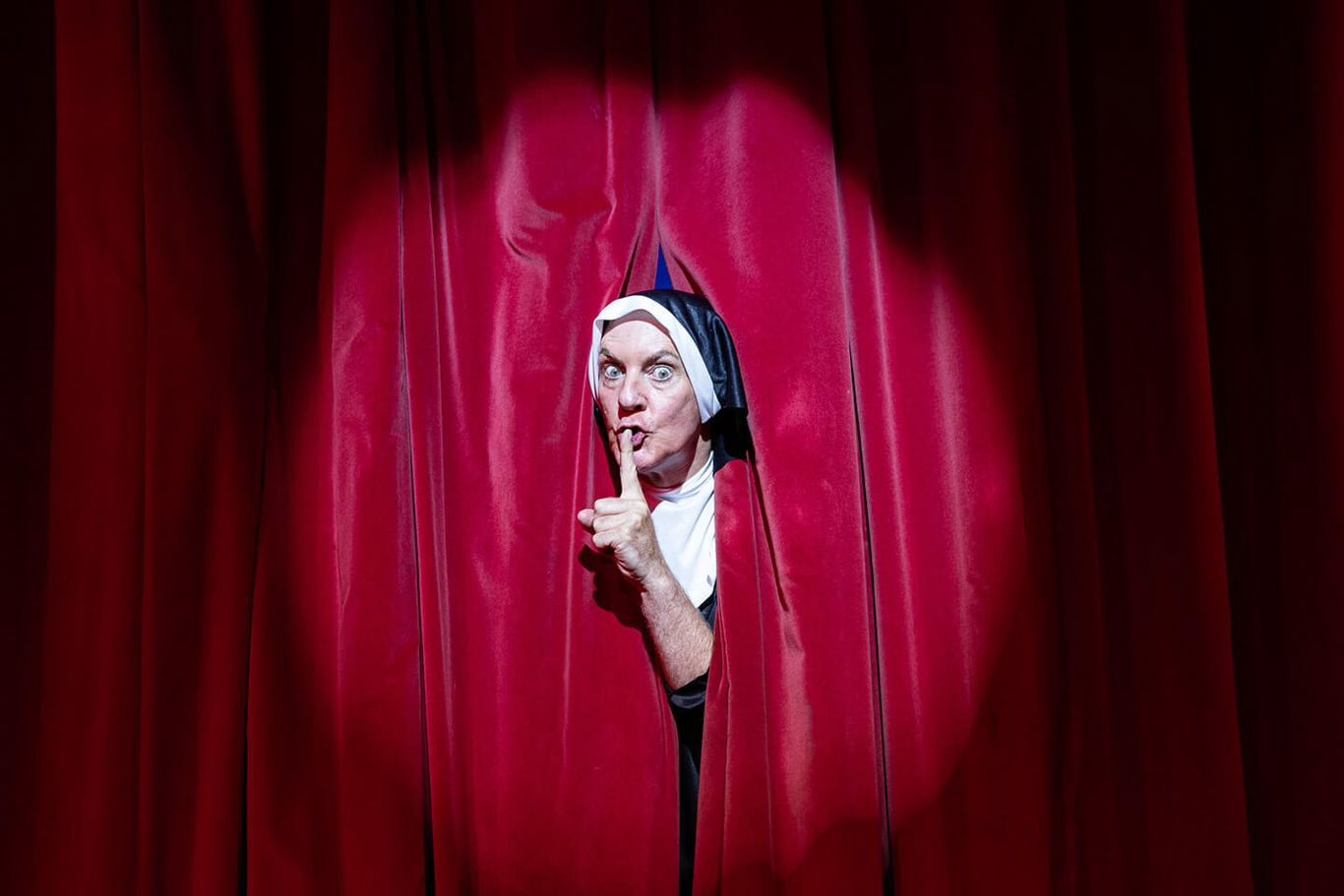
Andrew Robley brings hilarity and appropriately excessive theatricality to Nun the Wiser/Madame Anita Tinkle, although these moments could have benefited from a little more pace. Vincent Hayes, who created Brick Lane Music Hall, is hugely enjoyable as MP Drew Peacock, playing the character with exactly the charm and absurdity required. His transition out of character to address the audience carries a particular warmth - a moment where the history of the venue and the fiction of the production briefly collide.
Jordan Langford’s direction understands that comedy is fundamentally about rhythm. The production allows its actors considerable freedom without losing the specificity of the comic world, and there is a pleasing sense that anything could happen without the production itself ever quite losing control. Zara Kattan’s costumes are wonderfully ridiculous while retaining the scale and theatricality necessary for the stage, and Scott Hayes’ musical direction, alongside his own comic appearance, contributes significantly to the production’s sense of live, communal entertainment.
There is one notable dramaturgical issue: the person whose death provides the catalyst for the evening is never seen before the action begins. Establishing that character, even briefly, might have given the central conceit greater emotional or comic weight. The evening also runs long, beginning after dinner and finishing late enough that audiences relying on public transport would be wise to check their return journeys. Yet there is something undeniably atmospheric about giving yourself over to an entire evening of theatrical nonsense at Brick Lane Music Hall. Perhaps most impressive is the knowledge that the company had just four days to rehearse. Given that constraint, the confidence and ensemble chemistry on display are remarkable.
The Pleasures of Fanny is not without its structural wobbles, and the material could perhaps have benefited from a stronger initial contrast between theatrical polish and amateur chaos. But when the production hits its stride, it is joyous. It understands that the pleasure of this particular kind of theatre lies not in perfection, but in watching talented performers commit absolutely to the ridiculous. And this company certainly does.
This show was reviewed at Brick Lane Music Hall, London during its recent run.
Review written by Sam Sadler
AD/Gifted
Check out other reviews from Curtain Call Reviews and get in touch to have our reviewers head to your show